There
are many different solutions for those who snore at night. Some simply involve
changing your habits, while others involve purchasing face masks or
mouthpieces. However, none of these techniques is guaranteed, and many find
that while one or more of them reduces there snoring a bit, it doesn’t get rid
of it. However, snoring surgery is a radical option that can permanently cure
your snoring. However, it does have its downsides.
Natural Ways That are More Effective than Surgery
Before
going in for snoring surgery, it’s important that you determine whether or not
the surgery will actually help you. Snoring is caused by the vibration of
tissues in the back of the throat. This is different from sleep apnea and
snoring caused by blockages and allergies. While snoring is a common symptom of
both sleep apnea and allergies, there are other causes as well. Also, it’s
important to find the cause of your snoring so it can be treated appropriately.
If you have sleep apnea, for example, dealing with your snoring is not going to
take care of the underlying apnea.
Another
issue is that snoring surgery is often considered cosmetic or non-essential
surgery. This means that it may not always be covered by insurance or health
care programs. That can make snoring surgery very expensive.
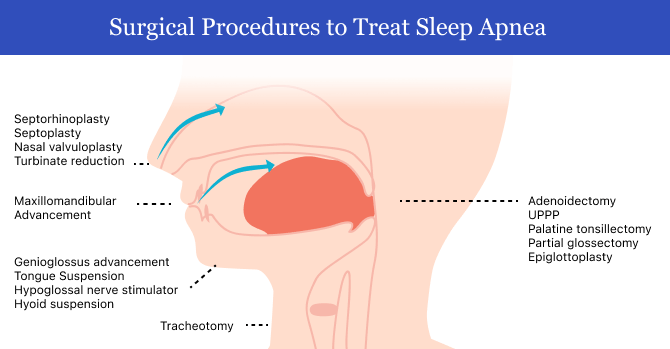
If
you do elect to have snoring surgery, however, there are several different
options. The most common is called LAUP, or Laser-Assisted Uvulopalatoplasty.
This procedure can be used to help snoring and for sleep apnea as well.
Basically, this process involves using a laser to remove the uvula, the small
bit of tissue that can be found in the back of the roof of your mouth. It may take
several sessions to fully remove the uvula.
Another
snoring surgery option is fairly new, but it can be done in your doctor’s
office. It’s called Radio Frequency Tissue Ablation, or RFTA. Like LAUP, it
involves shrinking the uvula so that it doesn’t vibrate against the back of the
mouth. The radio frequency energy that is used to shrink the uvula doesn’t
appear to be dangerous, but because the procedure is so new, there is little
information on long-term effects.
Finally,
the tongue suspension procedure, a technique that can be helpful for snoring
and sleep apnea, focuses on preventing the tongue from blocking the airway
while sleeping. A small screw is placed in the lower jaw and connected to the
tongue via stitches. This surgery is reversible, but like RFTA, no long-term
studies have yet to be completed.
Snoring
surgery is, as mentioned, very expensive, and it can be quite painful, too.
There are many different alternatives if you don’t want to take such a radical
step. One of these alternatives is to use natural methods to control your
snoring. There are many different natural snoring remedies, and if you try
several of them, chances are you’ll find one that helps you. You can get a
great list of natural snoring solutions and how they work in the eBook found at
the website below.
0 Comments